

Light-burned Magnesium Calcination Solution
Scheme Overview
Light‑burned magnesium is produced by calcining magnesite in a rotary kiln at high temperatures ranging from 900 to 1,100°C. It is widely used in various industries, including building materials, chemical engineering, metallurgy, and pharmaceuticals, and serves as an ideal raw material for manufacturing fireproof boards, lightweight partition panels, magnesium sulfate, papermaking, desulfurization processes, and furnace‑protective slagging in steel plants.
Magnesite is ground, then subjected to roasting in a rotary kiln at approximately 800–1000°C, causing it to decompose and release CO₂. 2 or H 2 O, which yields light‑burned magnesium oxide powder—also known as light‑burned magnesia, caustic magnesia, or light‑burned magnesium—and commonly referred to as “bitter earth powder.” Light‑burned magnesium oxide powder is loose in texture and highly chemically reactive; it can be used to manufacture magnesium cement, magnesite building materials, thermal insulation products, and more, while also serving as an intermediate product in the two‑step calcination process for producing high‑quality magnesia.
Based on the calcination characteristics of light‑burned magnesium, we have developed a rotary kiln process to achieve energy savings, increased production, and enhanced reactivity. This technology has been fully refined: compared with other furnaces of similar capacity, it reduces fuel consumption by one‑third, meets national emission standards, delivers stable product quality, and lowers overall costs.
Brief description of the manufacturing process:
● Use powdered materials with a mesh size of 150 to 200.
● A belt conveyor lifts the material to the four‑stage cyclone preheater, where it is gradually preheated through the four stages to approximately 500°C before entering the rotary kiln.
● After entering the rotary kiln, the material is gradually heated from 500°C to 900–1000°C and passes through rapidly and uniformly, meeting the decomposition requirements before being discharged from the kiln head.
● The material discharged from the kiln head is slowly cooled by a composite cooler, then discharged from the kiln and fed into the storage bin.
● The flue gas used in the preheater is the hot exhaust gas discharged from the kiln tail, representing waste heat recovery and thereby saving substantial amounts of energy.
● The flue gas discharged from the preheater, after being treated by the tail-gas treatment system (including cooling, desulfurization, and denitrification processes), is sent to the dust collector.
● The flue gas entering the dust collector is filtered to meet national standards before being discharged.
Process flow
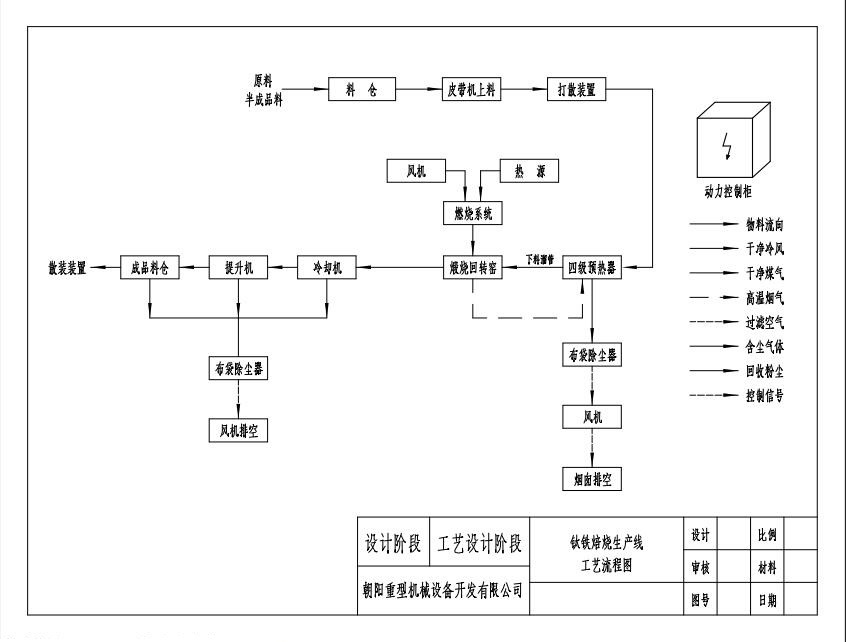
Process Layout Diagram
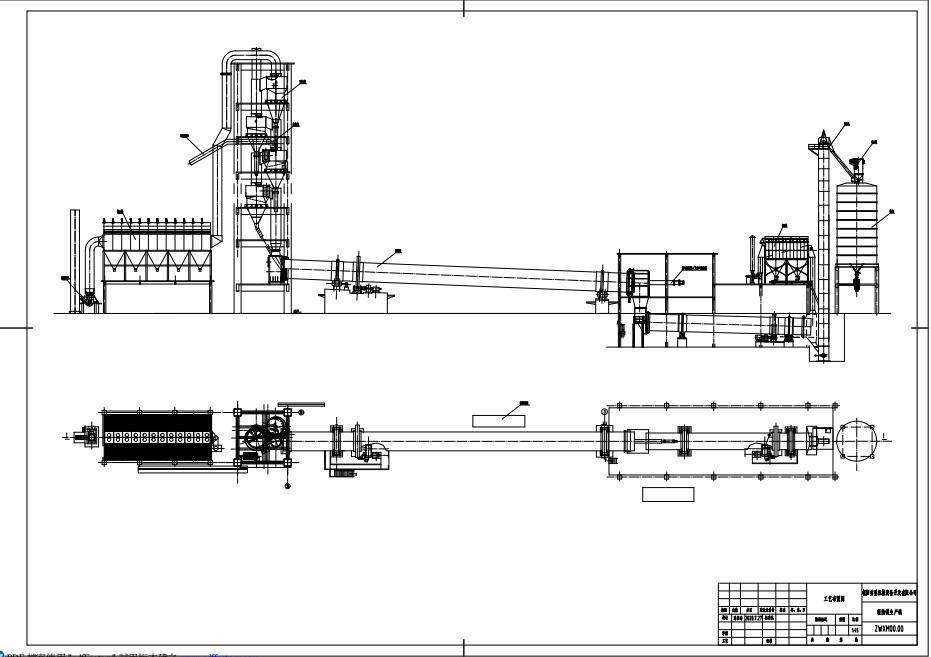
Case

undefined
相关产品
undefined
Contact Us

Tel:+86-421-7268378 +86-421-7268358
Mobile:+86-13324215382
Fax:+86-421-7268328
E-mail:czkf@czochina.com
Add:No. 26, Section 2, Longquan Avenue, Development Zone, Chaoyang City, Liaoning Province, China