

Ferro-Molybdenum Roasting and Smelting Engineering Solution
Process Technology and Economic Indicators —
Molybdenum concentrate roasting: After drying, the molybdenum concentrate contains a total moisture and oil content of approximately 2% to 4%, while maintaining its original particle size and loose bulk density. The roasting heat source may be coal, fuel oil, or various gaseous fuels; fuel consumption is expressed in terms of standard coal, with a specific rate of G ≈ 250–300 kg per ton of concentrate. In energy‑efficient rotary kiln roasting, fuel consumption is essentially zero during normal production. A internally heated rotary kiln can produce approximately 6–14 tons per day of molybdenum oxide; this capacity yields high output when used for ferromolybdenum smelting but lower output when applied to molybdenum chemical production. For ferromolybdenum smelting, the molybdenum oxide produced should have a sulfur content of less than 0.1%; for molybdenum chemical applications, the soluble molybdenum content in the roasted molybdenum sand should be at least 98%. Dust recovery from roasting flue gases is highly efficient, resulting in an overall recovery rate η ≥ 98.5% for molybdenum concentrate roasting within the production system.
Molybdenum‑iron smelting: Each furnace produces 2.5–3.0 tonnes of molybdenum‑iron. The slag generated during the smelting process may be dry slag or water‑quenched slag. The smelting slag can be subjected to gravity concentration to recover molybdenum‑iron. The flue gas flow rate is approximately 80,000–100,000 m³/h; after passing through a cyclone dust collector and a baghouse dust collector in series, the collection efficiency exceeds 95%. For every tonne of molybdenum‑iron produced, about 12 kg of dust can be recovered, with a molybdenum content of roughly 12–14%. The recovered dust can either be returned to the smelting process or sold externally.
Performance and Features —
|
Molybdenum Concentrate Roasting: Both internal- and external-heating rotary kiln roasting technologies for molybdenum concentrate are highly mature, with stable and reliable process operation, advanced technical and economic performance indicators, strong adaptability to feedstock and production capacity, minimal equipment maintenance requirements, and long service life. The system also achieves a high recovery rate of the roasted product. |
 Molybdenum‑iron smelting: Molybdenum‑iron smelting furnaces can be either stationary or mobile. For small‑scale production, a stationary furnace is recommended; for larger scales, a mobile furnace is preferred. The batching process may be automated to ensure precise proportions, thereby achieving optimal smelting performance and high recovery rates. (Manual batching is also an option.) |
|
|
Recovering dust from smelting flue gases is beneficial for environmental protection and also offers significant economic value; under normal operating conditions, continuous production can recoup the investment in environmental protection facilities within six months. |
|


Process Flow —
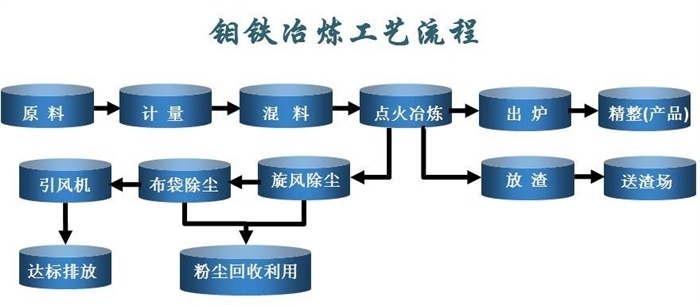
Molybdenum concentrate roasting
Ferro-molybdenum smelting
Typical Application Examples —
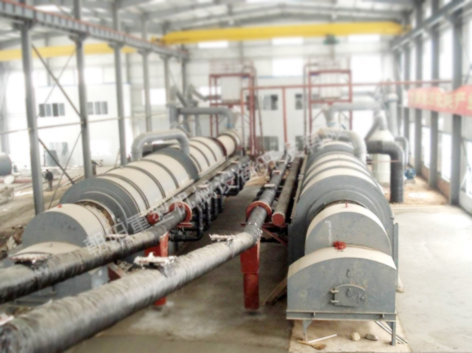
▍ Jinzhou Xinhualong Molybdenum Industry Co., Ltd.
▍ Hengyue Ferroalloy Plant, Chifeng, Inner Mongolia
▍ Fengning Xinyuan Mining Co., Ltd.
▍ Linxii Jinyu Molybdenum Products Processing Co., Ltd. of Northeast Special Steel Group
▍ Tianjin Hongyuan Ferrotitanium Co., Ltd.
▍ Chaoyang Jinda Molybdenum Co., Ltd.
Case

undefined
相关产品
undefined
Contact Us

Tel:+86-421-7268378 +86-421-7268358
Mobile:+86-13324215382
Fax:+86-421-7268328
E-mail:czkf@czochina.com
Add:No. 26, Section 2, Longquan Avenue, Development Zone, Chaoyang City, Liaoning Province, China