

Introduction to the Production Process of High-Titanium Slag
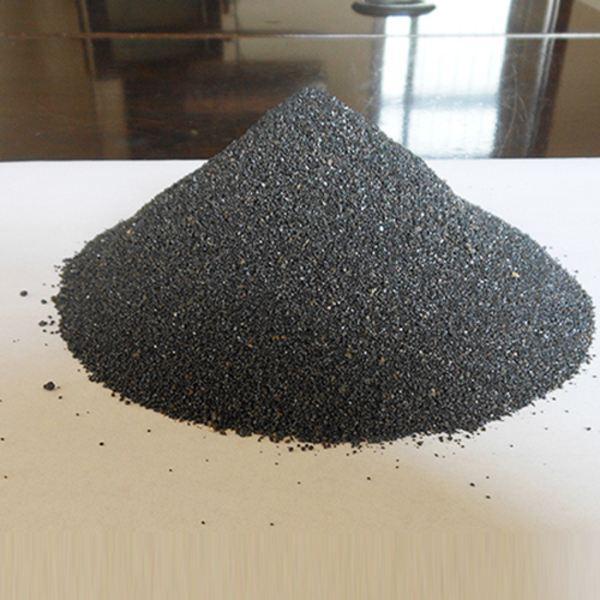 High‑titanium slag is a titanium‑rich concentrate produced through a physical manufacturing process. It is obtained by heating and melting titanium ore in an electric furnace, which causes the titanium dioxide and iron to melt and separate, yielding a high‑titanium‑dioxide‑content concentrate. High‑titanium slag is neither waste nor a byproduct; rather, it serves as a premium raw material for the production of titanium tetrachloride, titanium dioxide pigment, and sponge titanium.
In recent years, with the development of China’s titanium dioxide and sponge titanium industries, demand for high‑titanium slag has been increasing year by year. In particular, high‑titanium slag boasts a high titanium content, generates relatively small volumes of “three wastes” that require treatment, exhibits high resource and energy utilization efficiency, and can help improve product quality. Although domestic production of high‑titanium slag continues to expand, it still falls short of meeting robust domestic demand, necessitating substantial annual imports to bridge the gap. 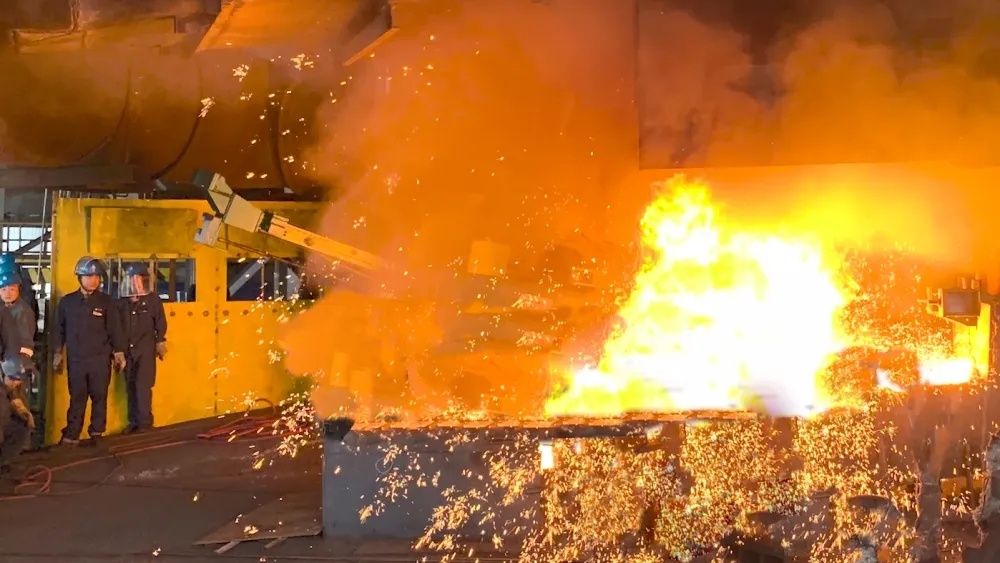
At present, the production of high‑titanium slag in China primarily relies on electric‑arc furnace smelting, a high‑temperature metallurgical process that suffers from high energy consumption, stringent requirements for reducing agents, low throughput, and elevated production costs. 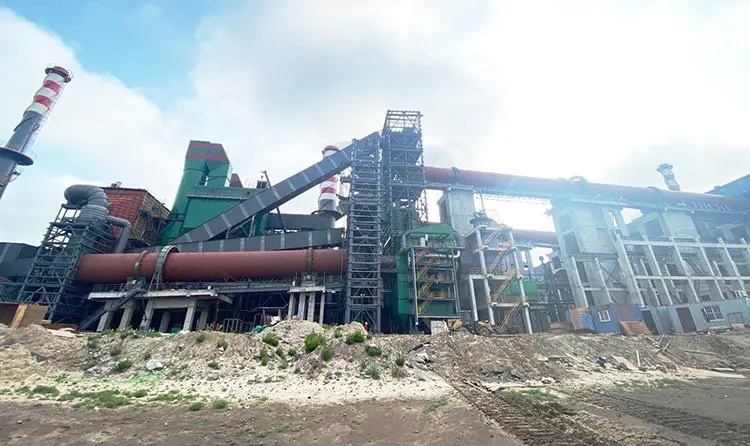
To address the aforementioned issues, our company has conducted systematic research and adopted a process that combines a rotary kiln with a submerged‑arc furnace for the pre‑reduction and smelting of ore. This technology has been thoroughly validated in the smelting of lateritic nickel ores. Given that the production of high‑titanium slag shares similar process principles with lateritic nickel ore smelting, and considering current requirements related to production costs, environmental protection, and energy consumption, the most viable approach for producing high‑titanium slag today is the integrated use of a rotary kiln and a submerged‑arc furnace. This process offers unparalleled advantages and is poised to become the mainstream technology driving the development of high‑titanium slag production.
Compared with conventional technologies, its advantages are as follows:
1. Low energy consumption, with energy use per ton of finished product reduced by approximately 30%–40%.
2. During the rotary kiln reduction process, the metallization rate is high, reaching approximately 70%–80%.
3. The output of the electric furnace has increased significantly, and the introduction of hot charge into the furnace shortens the reaction time.
Based on the demand in the nonferrous metallurgy sector over recent years, our company has increased its investment in both human and financial resources for the research, development, and production of metallurgical processes and equipment related to molybdenum, titanium, vanadium, lateritic nickel ores, and other materials. By accumulating experience and continuously innovating, we have established an industrial structure that spans from process design to equipment manufacturing, installation, and commissioning. This enables us to address a full range of customer needs—from project consulting to post‑implementation maintenance—while providing tailored process designs and high‑quality, reliable products.
Case

undefined
相关产品
undefined
Contact Us

Tel:+86-421-7268378 +86-421-7268358
Mobile:+86-13324215382
Fax:+86-421-7268328
E-mail:czkf@czochina.com
Add:No. 26, Section 2, Longquan Avenue, Development Zone, Chaoyang City, Liaoning Province, China